
Verification-Backed Traceability for Audit-Ready Compliance
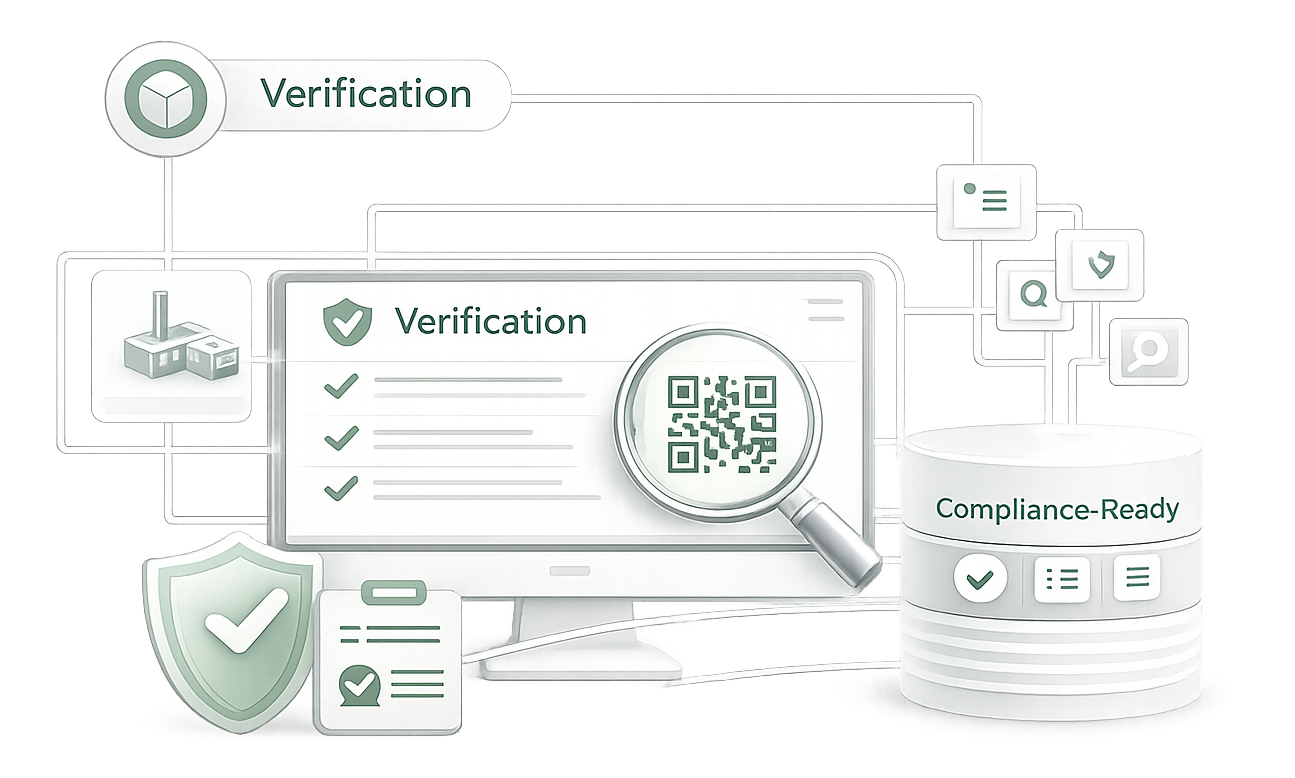
EcoFabric Trace™ integrates independent verification frameworks, including Bureau Veritas, to ensure supply chain data is accurate, credible, and ready for compliance.
Capturing supply chain data is an important first step, but on its own, it is not enough.
Regulators, partners, and customers increasingly expect data that can be trusted and validated.
For data to be useful in real-world scenarios, it needs to be:
- Accurate and consistent
- Verifiable through independent processes
- Ready for audit and compliance checks
Without verification, even well-structured data may not meet regulatory expectations or stand up to scrutiny.
Verification with Bureau Veritas

Third-party validation of product data and claims

Increased confidence with regulators and partners
Stronger positioning for compliance and reporting
Standards Alignment with GS1
EcoFabricTrace aligns with GS1 global standards to ensure that supply chain and product data is structured, consistent, and interoperable across systems. This enables organisations to move from fragmented data to a standardised framework that supports compliance, reporting, and integration with partners and regulators.

GTIN (Global Trade Item Number)
Provides a unique and consistent identifier for each product

EPCIS (Electronic Product Code Information Services)
Captures supply chain events in a structured, event-based format
Interoperable Data
Ensures information can be shared across suppliers, systems, and regulatory frameworks
The Risk of Unverified Data
Many organisations rely on self-reported data or fragmented supplier inputs, which can lead to inconsistencies and gaps. This creates real risks when it comes to compliance and reporting.
- Inaccurate or incomplete sustainability claims
- Difficulty meeting regulatory requirements
- Increased exposure to greenwashing risks
- Limited confidence during audits
Without a reliable verification process, organisations may struggle to prove the integrity of their data.
Verification-Backed Data Infrastructure
EcoFabric Trace™ integrates verification into the traceability process, ensuring that data is not only captured, but also validated and trusted. Rather than treating verification as a separate step, it becomes part of the overall data workflow.
Key Capabilities
- Integration with independent verification providers
- Alignment with audit and certification processes
- Structured data that supports verification
- Support for regulatory and compliance reporting
How Verification is Integrated
EcoFabric Trace™ connects data capture and verification into a clear and structured process.
This ensures that supply chain data is not only collected, but also validated, trusted, and ready for compliance use. By embedding verification directly into the workflow, organisations can move from fragmented data to reliable, audit-ready records without adding complexity.

1. Data Capture
Supply chain data is collected and organised into a consistent format as it is created.

2. Verification Process
Data can be assessed through independent verification frameworks to ensure accuracy and reliability.

3. Validation
Verified data is linked to specific products and supply chain events, creating a trusted record.
4. Output
Verified information is included in Digital Product Passports and compliance reporting outputs.
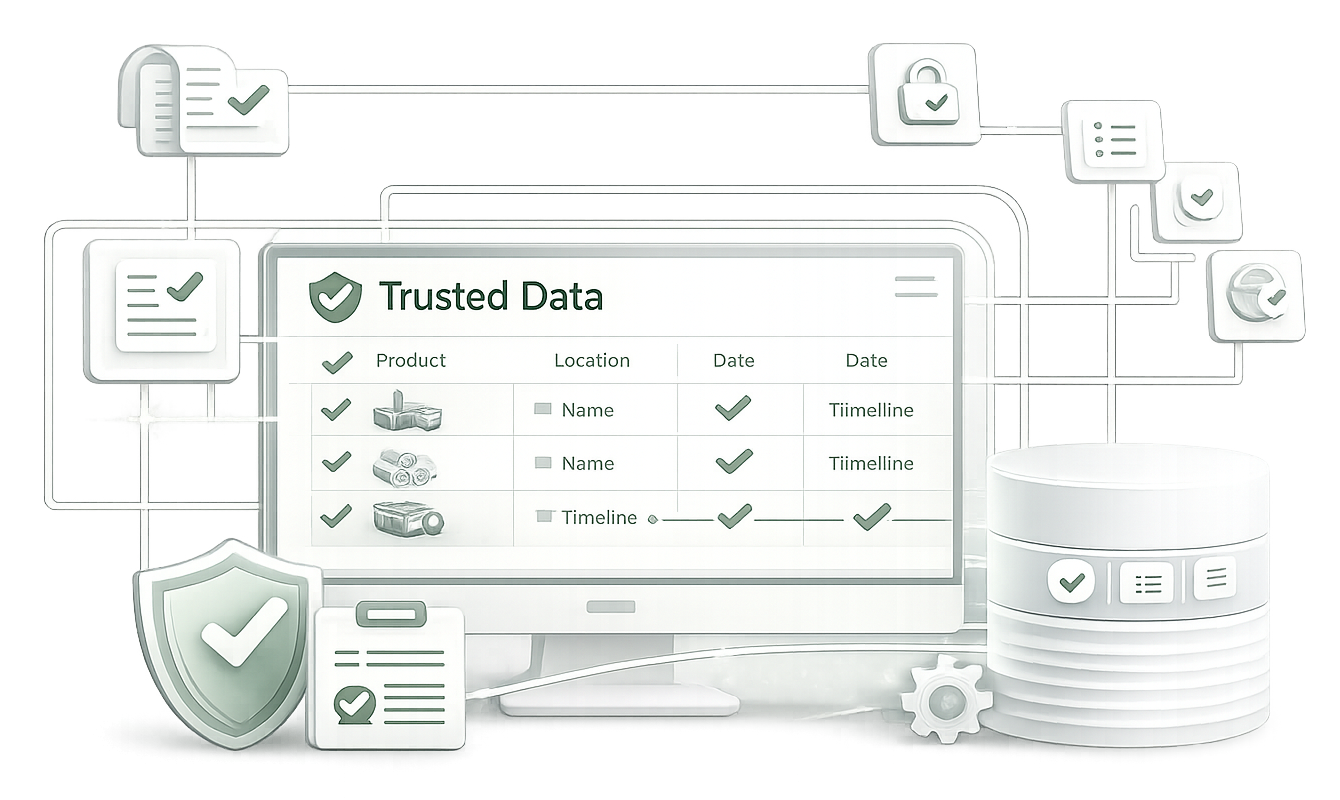
From Data Collection to Trusted Data
Key Benefits
- Audit-ready data for compliance requirements
- Reduced risk of inaccurate or unsupported claims
- Increased trust with regulators and stakeholders
- Stronger alignment with ESG and DPP frameworks
- Improved confidence in supply chain data
- Clear and credible product transparency