
Digital Product Passport Infrastructure for Textile Compliance
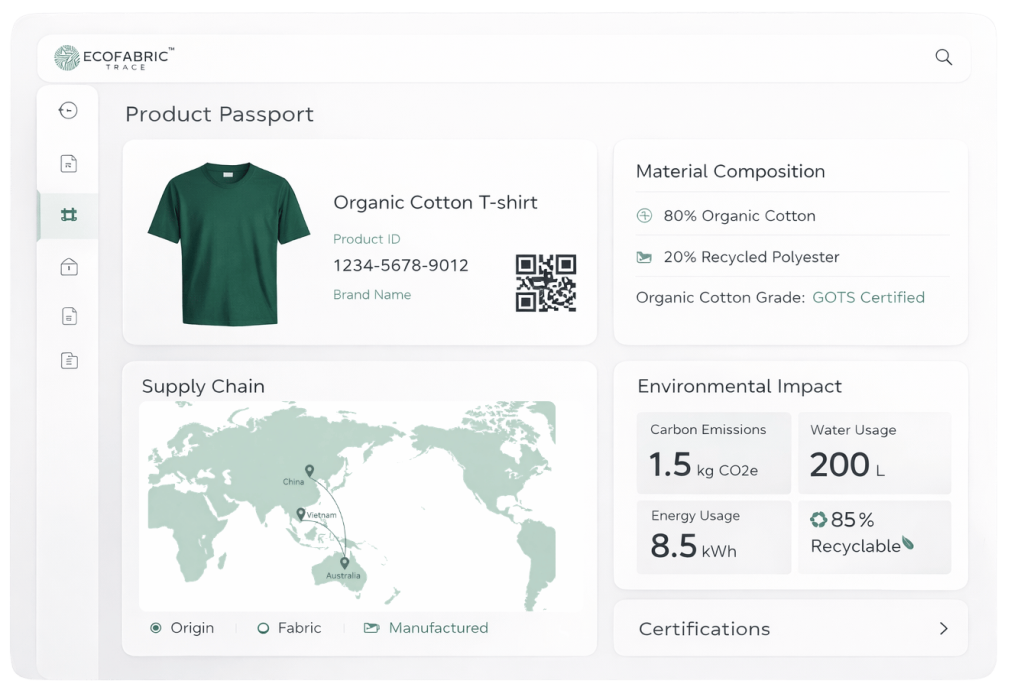
EcoFabric Trace™ enables brands and manufacturers to generate Digital Product Passports using structured, verifiable supply chain data aligned with global standards.
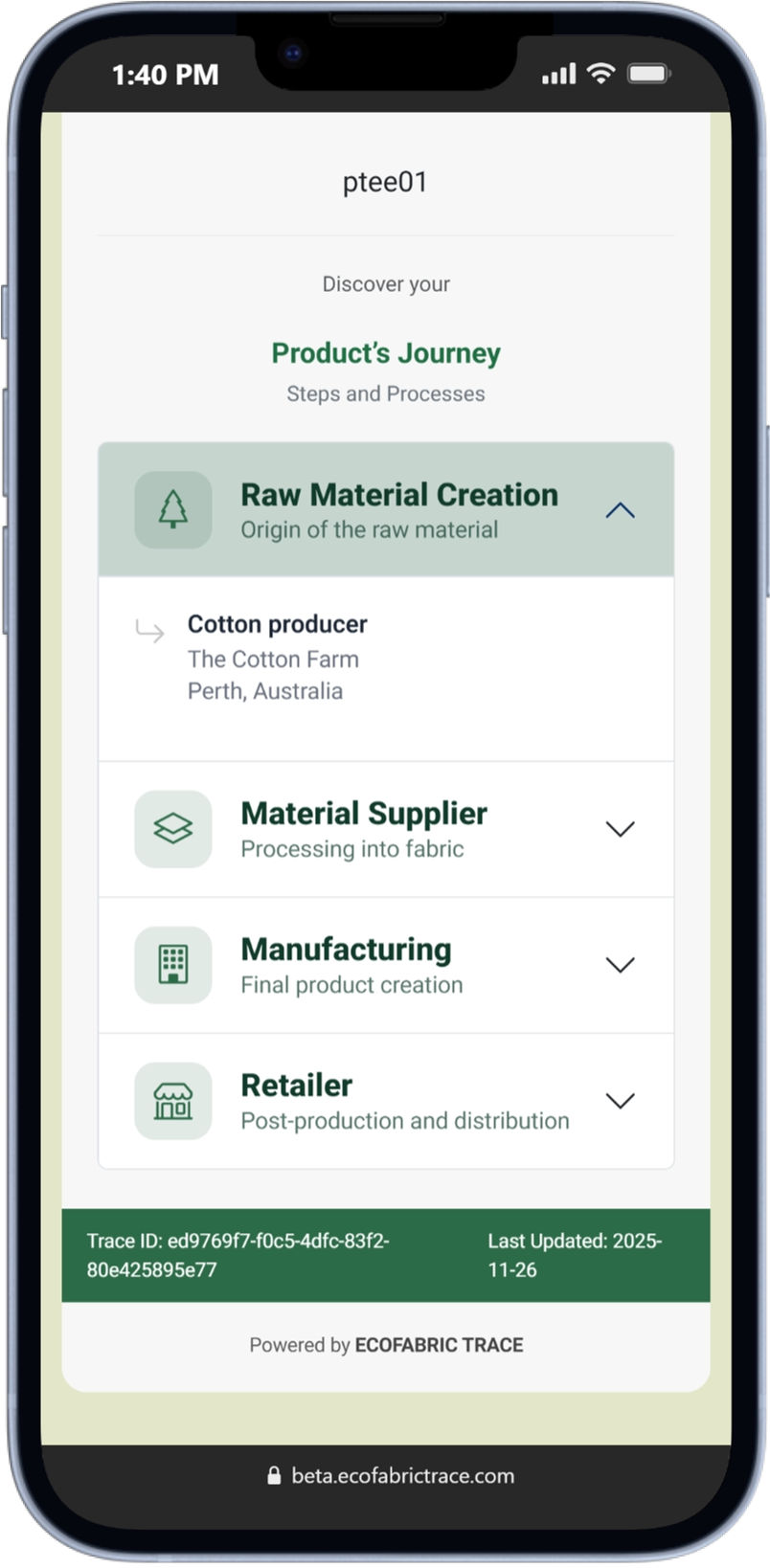
A Digital Product Passport (DPP) is a structured digital record that provides clear and consistent information about a product across its lifecycle.
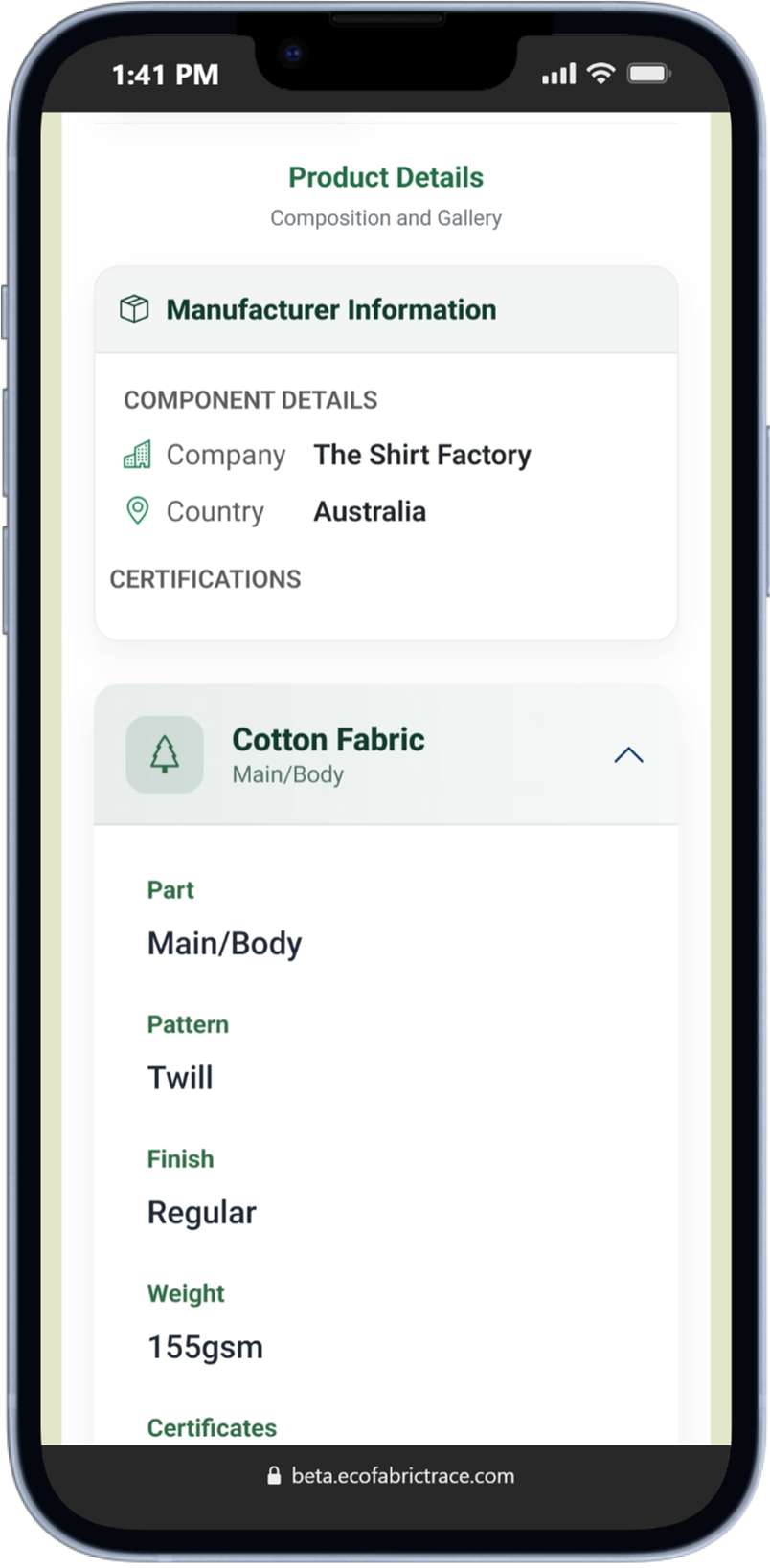
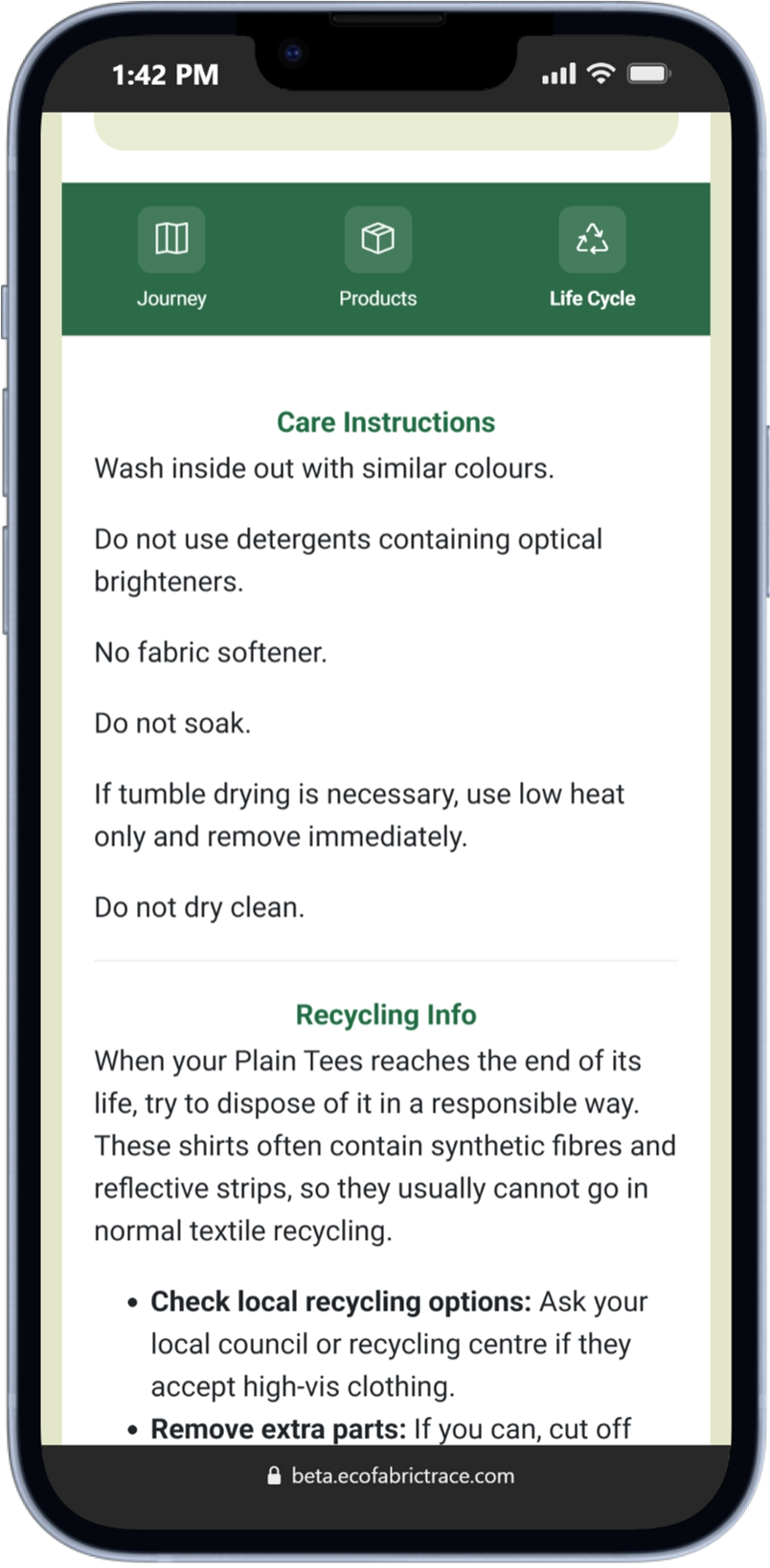
This includes where materials come from, how the product is made, and key data related to environmental impact and compliance.
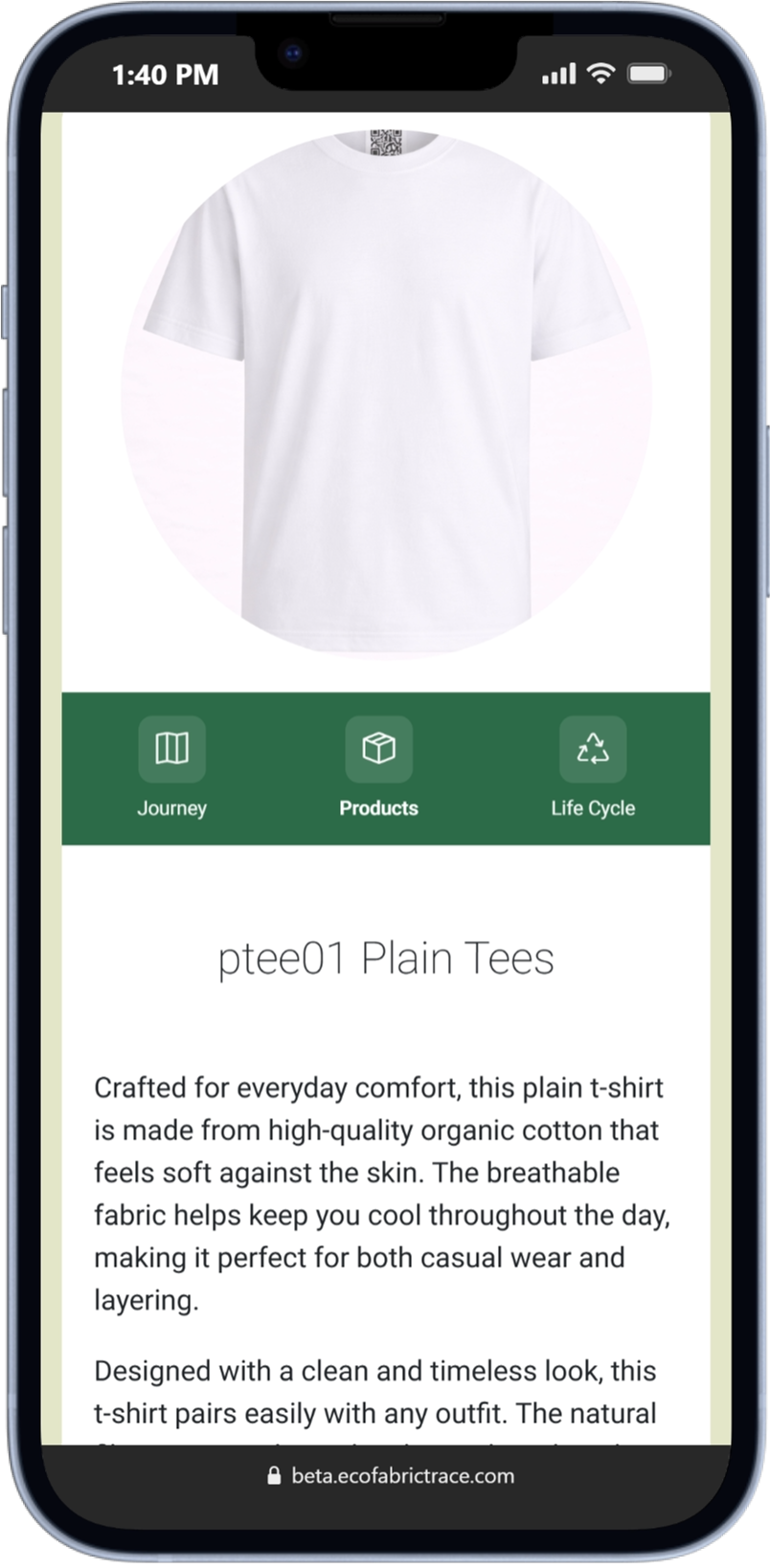
For non-technical users, a DPP can be thought of as a digital profile for each product, bringing together all important information in one place.
Under emerging EU regulations, Digital Product Passports will become a requirement for textile products entering the European market, making structured product data essential for compliance.
What is a Digital Product Passport?
How EcoFabric Trace™ Enables DPP Compliance
Key Capabilities

Product identification using global standards
Assign unique product identities to ensure consistency across systems and suppliers.

Structured supply chain data capture
Capture key events across sourcing, production, and distribution in a consistent and organised format.

Verification-backed product data
Support product records with verified data, improving reliability and audit readiness.

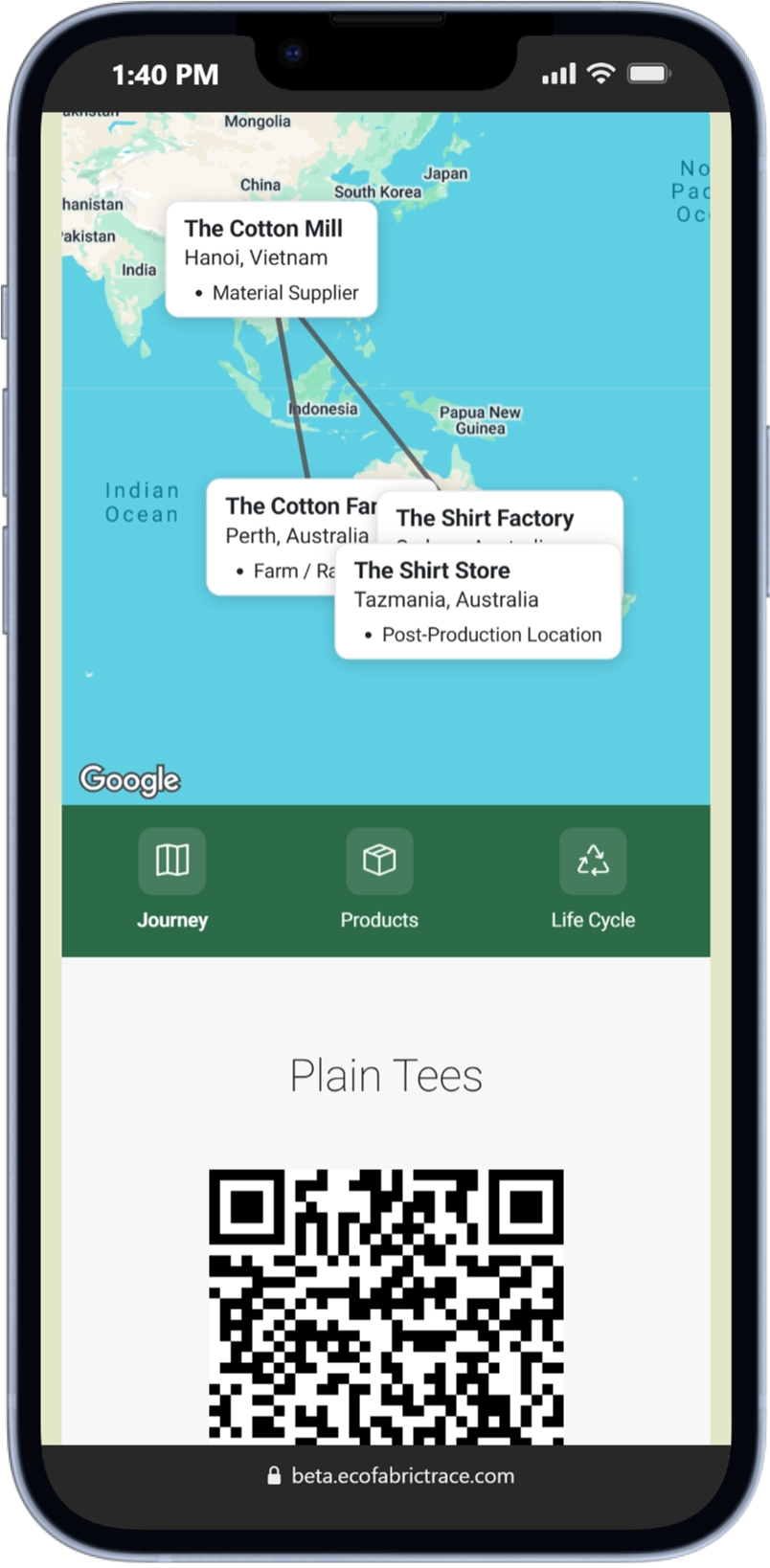
QR-linked Digital Product Passports
Deliver accessible product information through QR-linked digital records that can be shared and verified.
Key Benefits
Implementing Digital Product Passports with EcoFabric Trace™ provides both compliance and operational advantages.
- Prepare for EU Digital Product Passport requirements
- Create structured and consistent product data
- Improve supply chain visibility and traceability
- Support audit-ready and verified product records
- Enhance product transparency for partners and customers
- Reduce manual reporting and improve data efficiency
From Data to Digital Product Passport


EcoFabric Trace™ transforms supply chain data into structured Digital Product Passports through a clear and connected process.

Step 1: Product Identification
Each product is assigned a unique identity, ensuring it can be consistently tracked across systems and supply chain partners.

Step 2: Supply Chain Data Capture
Key events are recorded across sourcing, production, and distribution, creating a structured record of how the product is made.

Step 3: Verification Layer
Product data can be validated through independent verification processes, improving trust and compliance readiness.

Step 4: Digital Product Passport
All data is combined into a structured Digital Product Passport, accessible through a QR code and ready for sharing and compliance use.